Crating and Shipping a Vertical Panel Saw

Screenshot 2 300x225

Saw Trax protects your investment.

Vertical Panel Saws are Big, Heavy, and Expensive pieces of machinery. When you are investing the money into these products, we invest the time in crating and shipping them properly. We want you to get the product you expect in the condition you expect it in.
Take a look at the steps we take when preparing your Vertical Panels Saw for shipment.

Crating and Shipping a Vertical Panel Saw Crating and Shipping a Vertical Panel Saw

Step 1:
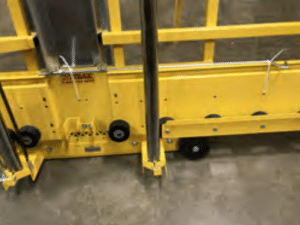
The small components are packed away in boxes to be secured to the Saw Frame (See Step 4). The Cord Holder is secured horizontally to the Saw Frame’s fence lip.
Example: The Sign Maker’s Series ships with 3 small component boxes. Other units have only 2 boxes with additional boxes added for accessories ordered. 888-729-8729 Updated 07-30-2020

Crating and Shipping a Vertical Panel Saw Crating and Shipping a Vertical Panel Saw

Step 2:
A wooden base is custom built here in the warehouse, and the Panel Saw Frame is placed on top and secured to it using metal bands.

Crating and Shipping a Vertical Panel Saw Crating and Shipping a Vertical Panel Saw

Step 3:
The Saw Frame and pallet are then boxed in with 2×4 planks and plywood. Additional wood blocks are placed under the frame in the guide tube brackets to support and prevent shifting during transportation.

Crating and Shipping a Vertical Panel Saw Crating and Shipping a Vertical Panel Saw

Step 4:
The boxes containing the small components are placed on the Saw Frame and kept in place with more metal bands.

Crating and Shipping a Vertical Panel Saw Crating and Shipping a Vertical Panel Saw

Step 5:
The Vertical Panel Saw is then wrapped in black manufacturing cling wrap and all labels are placed on the outside. A strap with wall mounting hooks is attached to secure the crated Panel Saw to the walls of the transporting truck.

Importance of Crating when Shipping a Vertical Panel Saw

Visualizing the meticulous crating process for Vertical Panel Saws, ensuring secure transportation.

Safeguarding Your Investment with Saw Trax

In the realm of industrial machinery, Vertical Panel Saws stand out as substantial, weighty, and financially significant acquisitions. Recognizing the substantial investment associated with these products, Saw Trax prioritizes meticulous care in both the crating and shipping processes. Our commitment is to ensure that the product you receive aligns precisely with your expectations, arriving in impeccable condition.

An examination of our rigorous preparation procedures reveals the dedication we invest in securing your Vertical Panel Saw for shipment.


Procedure Overview for Safely Shipping Vertical Panel Saws:

Individual components are meticulously packed into designated boxes, with provisions for attachment to the Saw Frame in subsequent steps (refer to Step 4). The Cord Holder is affixed horizontally to the Saw Frame’s fence lip. Notably, specific models, such as the Sign Maker’s Series, are shipped with three small component boxes, while others may include additional boxes for separately ordered accessories.

  • It’s involves a meticulous process of organizing and securing the various small components that accompany the Vertical Panel Saw. These components, integral to the functionality of the machinery, are methodically packed into specialized boxes. Notably, the configuration of these components is designed with the subsequent attachment to the Saw Frame in mind, as elucidated in Step 4 of the shipping process.
  • One specific component, the Cord Holder, is affixed horizontally to the Saw Frame’s fence lip, ensuring a secure placement and facilitating a streamlined assembly upon arrival. For instance, in the case of the Sign Maker’s Series, the shipping package comprises three distinct small component boxes. It is essential to note that the packaging approach is adapted to different models, with variations in the number of boxes to accommodate the specific features and accessories associated with each unit. Additional boxes may be incorporated to cater to separately ordered accessories, providing a tailored shipping solution that aligns with the diverse requirements of our clientele.
  • The attention to detail during this initial step underscores Saw Trax’s commitment to delivering a product that not only meets but exceeds the expectations of our customers. By investing the necessary time and care in the packaging of small components, we aim to ensure a seamless and efficient assembly process for end-users, thereby enhancing the overall user experience and satisfaction with our Vertical Panel Saws.

Ensuring the safe journey: Witness the secure shipping of a Vertical Panel Saw with Saw Trax.

A bespoke wooden base, crafted on-site in our warehouse, is created to accommodate the Panel Saw Frame. The frame is then carefully positioned on the base and securely fastened using metal bands.

  • It’s involves the construction of a customized wooden base, a pivotal aspect of the shipping process for Vertical Panel Saws. This meticulous crafting takes place within the confines of our warehouse, where skilled artisans employ precision and attention to detail to create a foundation that is specifically tailored to accommodate the unique characteristics of each Panel Saw.
  • The construction of the wooden base is a deliberate and measured process. Expert craftsmen assess the specifications of the Panel Saw Frame, ensuring that the dimensions and requirements are taken into account during the creation of the base. This bespoke approach is a testament to our commitment to precision and excellence, as it allows for a snug and secure fit of the Panel Saw on the base.
  • Once the wooden base is crafted to perfection, the Panel Saw Frame is carefully positioned on top of it. This placement is not arbitrary; it is a strategic alignment that ensures optimal stability during the subsequent stages of transportation. To fortify this connection and further safeguard against any potential movement or vibration during transit, robust metal bands are employed to securely fasten the Panel Saw Frame to the wooden base.
  • Therefore, embodies a fusion of craftsmanship and engineering, where the expertise of our team is harnessed to create a foundation that not only supports the physical weight of the machinery but also guarantees its structural integrity throughout the shipping journey. This tailored and secure foundation is a key component of Saw Trax’s commitment to delivering Vertical Panel Saws in pristine condition, ready for seamless installation and utilization by our discerning customers.

The Saw Frame and its associated pallet undergo encasement with 2×4 planks and plywood, ensuring robust protection. Supplementary wooden blocks are strategically positioned beneath the frame within the guide tube brackets to provide support and minimize movement during transit.

  • The meticulous process of preparing Vertical Panel Saws for shipment reaches a critical juncture where emphasis is placed on the comprehensive protection of the Saw Frame and its associated pallet. This step is instrumental in safeguarding the machinery from the rigors of transportation, ensuring that it reaches its destination in optimal condition.
  • Having securely positioned the Saw Frame on the purpose-built wooden base in Step 2, the next step involves an additional layer of shielding. The Saw Frame and its accompanying pallet are enveloped in a robust casing crafted from 2×4 planks and plywood. This strategic encasement serves a dual purpose: shielding the machinery from external factors such as dust, moisture, and potential impact, and providing a durable structural reinforcement against the dynamic forces encountered during transit.
  • To further enhance the stability of the assembly, wooden blocks are strategically introduced under the frame within the guide tube brackets. These blocks play a crucial role in providing supplementary support, effectively reducing the risk of movement and potential damage that could occur during the shipping process.
  • It’s exemplifies Saw Trax’s commitment to the meticulous care and attention invested in every stage of the shipping process. By employing a multi-layered approach to protection, encompassing both structural reinforcement and strategic support, we aim to deliver Vertical Panel Saws that not only meet but exceed the expectations of our customers upon arrival, ensuring a seamless transition to operational use. This comprehensive strategy underscores our dedication to the preservation of our customers’ investments and the longevity of our high-quality machinery.

Experience expertise: Saw Trax showcases its expert crating services for Vertical Panel Saws in action.

Boxes containing the pre-packed small components are strategically arranged on the Saw Frame and firmly secured with additional metal bands.

  • The focus turns to the meticulous arrangement of the smaller components that were securely packed away in this. These components, integral to the functionality of the Vertical Panel Saw, are strategically placed on the Saw Frame as part of the comprehensive preparation for shipment.
  • The boxes containing the pre-packed small components are thoughtfully positioned on the Saw Frame, ensuring a systematic and secure arrangement. The placement is carefully orchestrated to optimize space utilization and to prevent any potential shifting or displacement during transit. This step is particularly critical, as it sets the stage for the subsequent assembly process upon the Vertical Panel Saw’s arrival at its destination.
  • To further fortify the arrangement, additional metal bands are employed, securely fastening the boxes in place on the Saw Frame. This measure not only ensures that the smaller components remain intact but also minimizes the risk of any unintended movement during the transportation phase.
  • This strategic organization of small components in it is emblematic of Saw Trax’s commitment to delivering a product that is not only well-protected during transit but also arrives with the convenience of an organized assembly process. By taking these meticulous steps, we aim to streamline the setup of the Vertical Panel Saw for our customers, providing an efficient and user-friendly experience upon receipt of the machinery.

Precision matters: Explore the image of a meticulously crated Vertical Panel Saw for secure transit.

The entire Vertical Panel Saw assembly is enveloped in black manufacturing cling wrap, and external labels are affixed. To further enhance stability during transportation, a strap featuring wall mounting hooks is attached, firmly securing the crated Panel Saw to the walls of the transporting vehicle. This comprehensive packaging and securing process is designed to safeguard the integrity of the Vertical Panel Saw during transit. For inquiries or assistance, please contact 888-729-8729 .

  • The meticulous packaging process for Vertical Panel Saws culminates with the application of a final layer of protection and the implementation of measures to secure the machinery for safe transportation.
  • The Vertical Panel Saw assembly, now configured with the Saw Frame, securely attached small components, and additional reinforcements, undergoes the final stage of encapsulation. The entire assembly is enveloped in a layer of black manufacturing cling wrap. This industrial-grade cling wrap serves as a barrier against dust, moisture, and other potential environmental factors that could compromise the integrity of the machinery during transit.
  • Simultaneously, external labels containing essential information about the shipment, handling instructions, and other pertinent details are affixed to the outside of the cling wrap. This ensures that handlers and recipients have clear and accurate guidance for the proper care and handling of the Vertical Panel Saw.
  • To further secure the crated Panel Saw during transportation, a robust strap equipped with wall mounting hooks is attached. This strap serves as an additional layer of reinforcement, securing the crated assembly to the walls of the transporting truck. This measure not only minimizes the risk of movement but also enhances stability, safeguarding the machinery against potential shifts or vibrations during transit.
  • Encapsulates Saw Trax’s commitment to delivering Vertical Panel Saws with the utmost care and attention to detail. By employing industrial-grade materials for protection and implementing secure strapping techniques, we aim to ensure that our customers receive their machinery in impeccable condition, ready for efficient installation and optimal performance. This final step reflects our dedication to providing a seamless and secure shipping process that aligns with the high standards we set for our products.
Continue Reading

Woodshop News Recommends SawTrax Panel Saws and Dollies

Woodshop News

Woodshop News

Source:

https://www.woodshopnews.com/features/making-it-all-better

The secret is out! SawTrax delivers quality products made right here in the USA. Whether you are looking for value, or a quality of life improvement for your operations, SawTrax specializes in delivering panel saws, dollies and accessories to facilitate cutting and moving your materials so you can focus on productivity and growth.


Panel Saws

(cutting down on Saw Dust in your Shops)

Better Dust Control

Fine dust is a challenge in every shop. And while health is by far the greatest concern, woodshop dust also has many other negative effects that waste both money and time. The solution is to catch it where it’s born.

Woodshops create dust by either cutting or abrading. Cutting happens at saws, shapers, CNC routers, molders, drill presses – anywhere the shape of a part is changed. Abrasion occurs with portable sanders at the workbench, or with stationary profile machines and wide belt sanders, or during the finishing process as we sand between coats. Cutting produces fewer fine (small) and more gross (big) particles than abrading. The gross particles tend to settle close to the source, while the fines like to travel. Any air movement will carry them, and the causes can be anything from an open loading bay door to forced air heating and air conditioning, or ceiling fans, or even just employees and parts moving around the shop.”


Dollies

(heavy duty, tight turning radius)

Saw Trax (sawtrax.com) makes a series of very clever carts that are highly maneuverable. They can carry large and heavy loads on a combination of pneumatic tires and casters.”


SawTrax Appreciates the Community:

We sincerely appreciate the mention and kind words. If you want to feature SawTrax on your blog or website please feel free to reach out via email: info@sawtrax.com. Happy customer? We would love to hear your feedback on a video testimonial. Can view current video testimonials here: https://www.youtube.com/@SawTrax/videos

Continue Reading

Fenestration and the Role of SawTrax Dollies in Glass Transportation

Fenestration Windows And Doors Dolly 300x235
Fenestration Windows and Doors Dolly
Fenestration: windows and doors arranged on a building

Fenestration is a term that might not be familiar to everyone, but its products are used in almost every building around us. Derived from the Latin word “fenestra,” meaning “window,” fenestration refers to the arrangement, design, and construction of windows and doors in a building. As a key component of fenestration, glass plays a pivotal role in both aesthetics and functionality.

Glass, being fragile, requires meticulous care, especially during transportation. This is where SawTrax dollies come into play. In this blog post, we will delve into how SawTrax dollies are revolutionizing the transportation of glass, highlighting their benefits and features.

Benefits of Using SawTrax Dollies for Glass Transportation:

  • Safety: Glass is delicate. A slight mishandling can lead to cracks or complete breakage. SawTrax dollies are specifically designed to handle delicate materials such as glass. Their sturdy build ensures the glass is held firmly, reducing the risk of damage.
  • Efficiency: With SawTrax dollies, transporting large glass panels becomes less labor-intensive. Their designs accommodate various sizes and weights, allowing for the smooth movement of glass panels without strain.
  • Versatility: Beyond just glass, these dollies are versatile enough to handle other fenestration products like doors, frames, and even some hardware.
  • Cost-effective: By minimizing the risks of damage and increasing the efficiency of transportation, SawTrax dollies can result in significant cost savings in the long run. Damaged glass replacements can be expensive, both in terms of material cost and labor.

Features of SawTrax Dollies:

  • Robust Construction: Made with high-quality materials, SawTrax dollies are built to last. They are designed to withstand the weight and size of large glass panels, ensuring longevity.
  • Ergonomic Design: Ergonomics plays a vital role in the design of SawTrax dollies. Features such as easy-grip handles and smooth-rolling wheels ensure ease of maneuverability.
  • Adjustability: Some SawTrax dollies come with adjustable dividers or compartments, allowing users to transport multiple glass panels simultaneously without them touching each other.
  • Non-marking Wheels: The wheels on the dollies are designed to be non-marking, ensuring that floors remain scuff-free during the transportation process.

Why Choose SawTrax Dollies for Glass Transportation?

When it comes to transporting glass, the choice of equipment can make a world of difference. SawTrax dollies, with their specialized design and robust construction, offer an optimal solution for the fenestration industry. Their focus on safety, efficiency, and versatility makes them a top choice for professionals in the field.

Moreover, the reputation of the SawTrax brand, known for its innovation and quality, offers an additional layer of assurance. Whether you’re a fenestration professional or simply someone who occasionally deals with glass transportation, SawTrax dollies are a worthy investment for both peace of mind and practical utility.

In conclusion, as the fenestration industry continues to grow and evolve, the need for reliable tools and equipment becomes even more crucial. SawTrax dollies, with their outstanding benefits and features, stand out as a leading choice for glass transportation, ensuring safety, efficiency, and cost-effectiveness.

Continue Reading

What is a Panel Saw?

Logo

The Intricacies of the Panel Saw: More Than Just a Saw

The world of woodworking is vast and complex. It is brimming with tools and machinery, each designed with a specific purpose and function. Among the array of machinery sits the panel saw—a tool that many might overlook but plays a pivotal role in workshops and factories worldwide. Let’s dive deep into understanding what a panel saw is, its types, applications, and benefits.

Definition:

In its essence, a panel saw is a woodworking machine that is primarily used to cut large panels and sheets, such as plywood, MDF, melamine, or plastic. It provides accurate and straight cuts, ensuring that each piece is uniformly shaped and sized. Think of it as a larger, more specialized version of a table saw.

The Two Primary Types of Panel Saws

  1. Vertical Panel Saws: These saws hold the panel vertically. The sawing unit can move both horizontally and vertically, allowing for both rip (lengthwise) and cross (widthwise) cuts without having to move the workpiece. Vertical panel saws are ideal for workshops with limited floor space since they take up less room than their horizontal counterparts.
  2. Horizontal Panel Saws: The workpiece is laid flat (horizontally) on a table and is moved through a stationary blade or, in some designs, the blade moves through the stationary workpiece. This type is preferred for high-volume manufacturing because it’s generally faster and can sometimes incorporate automated features.

Benefits of Using a Panel Saw

  • Precision and Accuracy: One of the biggest advantages of a panel saw is its ability to make precise and accurate cuts. Its design minimizes errors and inconsistencies.
  • Efficiency: Especially in the case of horizontal panel saws, the process can be much faster than using handheld saws. They’re particularly efficient for businesses that handle large volumes of sheet materials.
  • Safety: Given that the material is held firmly in place, there’s reduced risk as compared to manually feeding a large panel through a smaller saw.
  • Versatility: While primarily designed for large sheets, panel saws can handle various materials and thicknesses with the right blade.

Applications of the Panel Saw

While most commonly associated with woodworking, panel saws are versatile and find use in various industries.

  • Cabinet Making: Ensuring uniform and straight panels for cabinets.
  • Sign Making: For businesses that produce large signage, panel saws can cut through materials like acrylic and aluminum composite.
  • Furniture Manufacturing: For everything from beds to tables and more.
  • Construction: Prefabricating components for installation.

Choosing the Right Panel Saw

If you’re considering adding a panel saw to your workshop, here are a few considerations:

  • Space: Vertical panel saws might be preferable for smaller workshops.
  • Volume: If you’re handling high volumes daily, consider a horizontal panel saw or one with automated features.
  • Material: Ensure that the saw you choose is suitable for the materials you work with most often.
  • Budget: Panel saws range from basic models to advanced ones with CNC capabilities. Decide what features you truly need and base your decision on that.

Woodworkers and Sign Shops Rely on Panel Saws Every Day

A panel saw might not be the first tool that comes to mind when one thinks of woodworking, but its value is undeniable. It streamlines processes, improves accuracy, and can be a game-changer for many businesses or enthusiasts. Whether you’re delving into woodworking or are a seasoned professional, understanding the capabilities and applications of tools like the panel saw is crucial in delivering top-notch results.

Continue Reading

Building a Panel Saw: Step-by-Step Guide

Logo

Panel saws are indispensable tools for both amateur and professional woodworkers. They allow for efficient, accurate, and straight cuts on large panels without requiring expansive space. While you can buy them, building your panel saw with a kit, you can save you money and give you the satisfaction of crafting your own tool. In this blog post, we’ll guide you through building your very own panel saw.

Why Build a Panel Saw?

A custom-made panel saw offers several advantages:

  • Cost-effective: Building your own tool can be cheaper than buying a commercial unit.
  • Customization: Tailor it to fit the specific requirements of your workspace and your needs.
  • Skill Development: It’s an excellent project to enhance woodworking and engineering skills.

Materials and Tools Required

Materials:

  • Plywood or MDF (Medium Density Fiberboard): For the frame and base.
  • 2×4 lumber: For the frame.
  • Circular saw: This will be integrated into the panel saw setup.
  • Aluminum or steel angle: For guide rails.
  • T-track and t-bolts: For adjustments.
  • Wood screws and bolts.
  • Nylon rollers or bearings.
  • Piano hinge.

Tools:

  • Measuring tape.
  • Square.
  • Drill with bits.
  • Saw.
  • Screwdrivers.
  • Clamps.

Building Your Panel Saw

Step 1: Framework Construction

  • Start by building a rectangular frame using the 2×4 lumber. This will act as the primary structure holding everything together.
  • Add additional cross-members for stability.

Step 2: Base

  • Attach a plywood or MDF base to the bottom of your frame. This base will support the panel when making cuts.

Step 3: Mounting the Circular Saw

  • Attach the circular saw upside down to a piece of plywood, ensuring it’s square.
  • This plywood will act as the carriage that will slide up and down.
  • Install nylon rollers or bearings on the sides of the plywood carriage. This will facilitate a smooth vertical movement against the frame.

Step 4: Guide Rails

  • Attach aluminum or steel angles vertically on both sides of your frame. This will guide your saw carriage and maintain a straight cut.

Step 5: Horizontal Bar

  • Above your frame, attach a horizontal bar. The saw carriage will slide along this bar for horizontal cuts.
  • You can use a piano hinge to allow the bar to fold down when not in use.

Step 6: T-track Installation

  • Add a T-track on the frame where you want adjustability, such as for setting the height for horizontal cuts.
  • Using T-bolts, you can adjust and lock the saw carriage in place.

Step 7: Safety First

  • Ensure there’s a clear on/off switch for your circular saw.
  • Consider adding a safety shield over the saw blade.

Tips and Recommendations

  • Blade Selection: Use a high-quality blade suitable for plywood or the specific material you plan to cut.
  • Regular Maintenance: Keep your guide rails and rollers clean and free of sawdust. Lubricate the rollers periodically.
  • Safety: Always wear safety glasses and hearing protection when using your panel saw. Ensure the area behind the panel saw is clear before making cuts.

Whether You Buy it Or Build It – Panel Saws Increase Productivity

Building a panel saw is a fulfilling project that can be beneficial for any woodworking enthusiast. It not only saves money but also offers a chance to customize a tool to your specific needs. With proper maintenance and care, your DIY panel saw will serve you well for years to come. Happy building!

Continue Reading