Author: Matt Anton

Why a Loose Bucket Handle Is the Most Dreaded Sight in the Paint Aisle

Paint Bucket Handle

Paint Bucket Handle

If you have walked through the paint department of a home center store, you have probably seen rows of heavy 5-gallon buckets tucked beneath pallet racks. They may hold paint, stain, drywall compound, plaster, or other contractor-grade materials. To the customer, they look like ordinary store inventory. To the paint team, they can be one of the hardest merchandising jobs in the aisle.

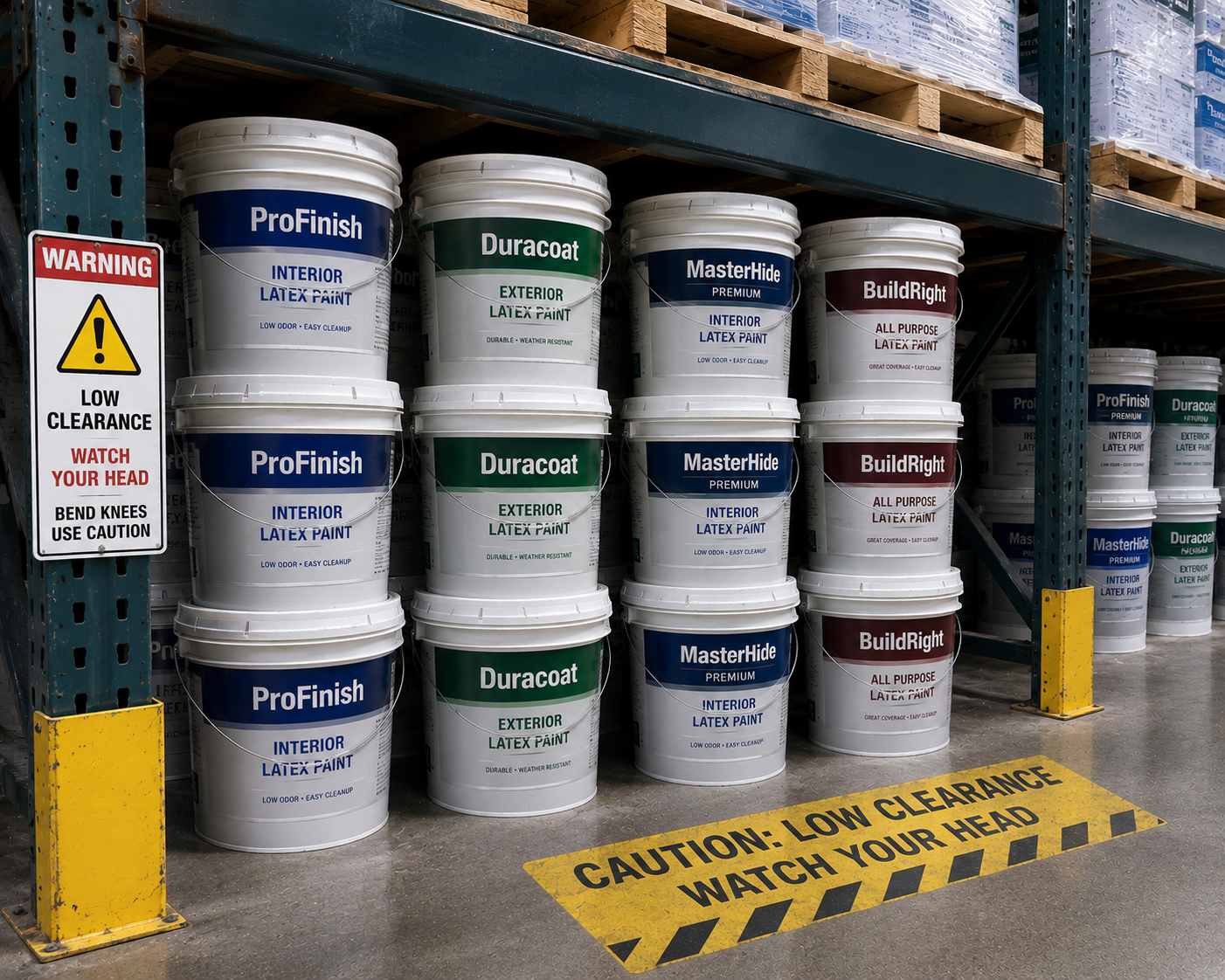
A full 5-gallon bucket can weigh roughly 50 to 65 pounds depending on what is inside. These buckets are often stacked two or three high and stored multiple rows deep under pallet racks. When the front row sells down, someone has to pull the back buckets forward so customers can reach them.

The Job Nobody Wants Under the Rack


Restocking Paint Buckets

The problem is access. Employees usually cannot get behind the buckets because merchandise is backed up against them from the other side. That means the only option is to pull from the front of the aisle.

Two-high stacks create a low-clearance problem. There is less room between the top bucket and the shelf above, so the employee has to work in a tighter space. Three-high stacks provide more vertical room, but the taller stack is less stable and more likely to tip when pulled from the bottom.

Either way, the task can involve crouching, reaching, crawling, or duck-walking under steel racking while trying to move heavy stacked buckets. That is not efficient, and it is not a job anyone looks forward to.

Why the Handle Matters So Much

Most people assume you just grab the bucket handle and pull. In real store conditions, it is rarely that simple.

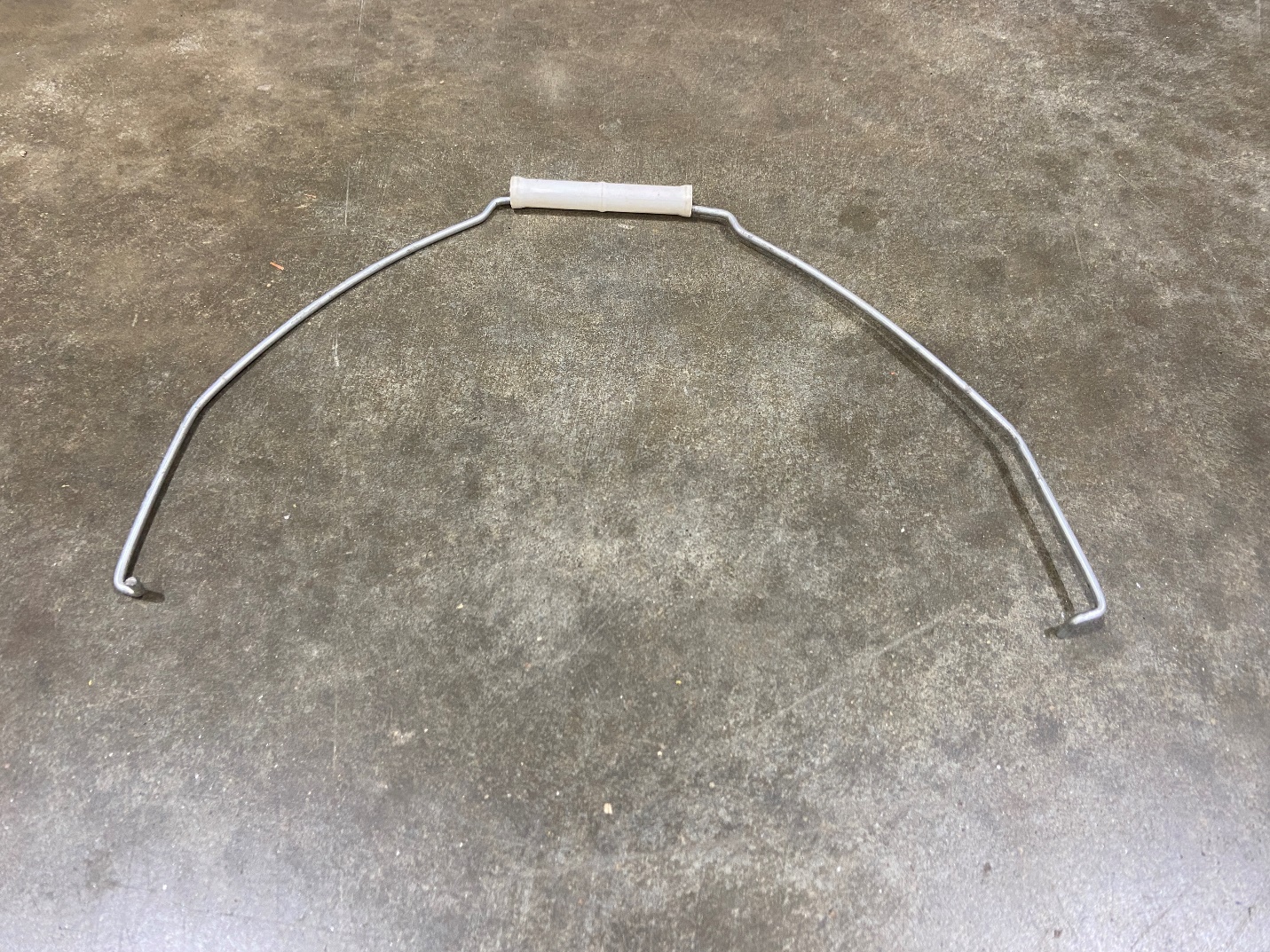
The handle may be facing the back of the rack. It may be pinned between two buckets. It may be folded down where the employee cannot reach it. In some cases, the lower bucket may not have a usable handle at all.

That is why a loose or unreachable bucket handle becomes such a dreaded sight. When one bucket is positioned at the front of the shelf, employees often have to remove it just to access and pull the stack behind it forward. Afterward, the front bucket must be returned to its original position, creating unnecessary extra handling.

The Old Way Wastes Time and Adds Risk

Before a purpose-built tool, the process often looked like this:

  • Move the front row of buckets into the aisle.
  • Crouch or crawl under the rack.
  • Try to grab the back stack by hand or with an improvised tool.
  • Pull the stack forward without tipping it.
  • Move the front buckets back into position.

That is a lot of extra handling for products that may weigh more than 50 pounds each. It also puts the worker closer to the hazard zone under the rack, where head bumps, back strain, awkward pulling, and falling buckets become real concerns.

The 5 Gallon Bucket Reacher Solves the Problem

Store Buckets Organizer Tool

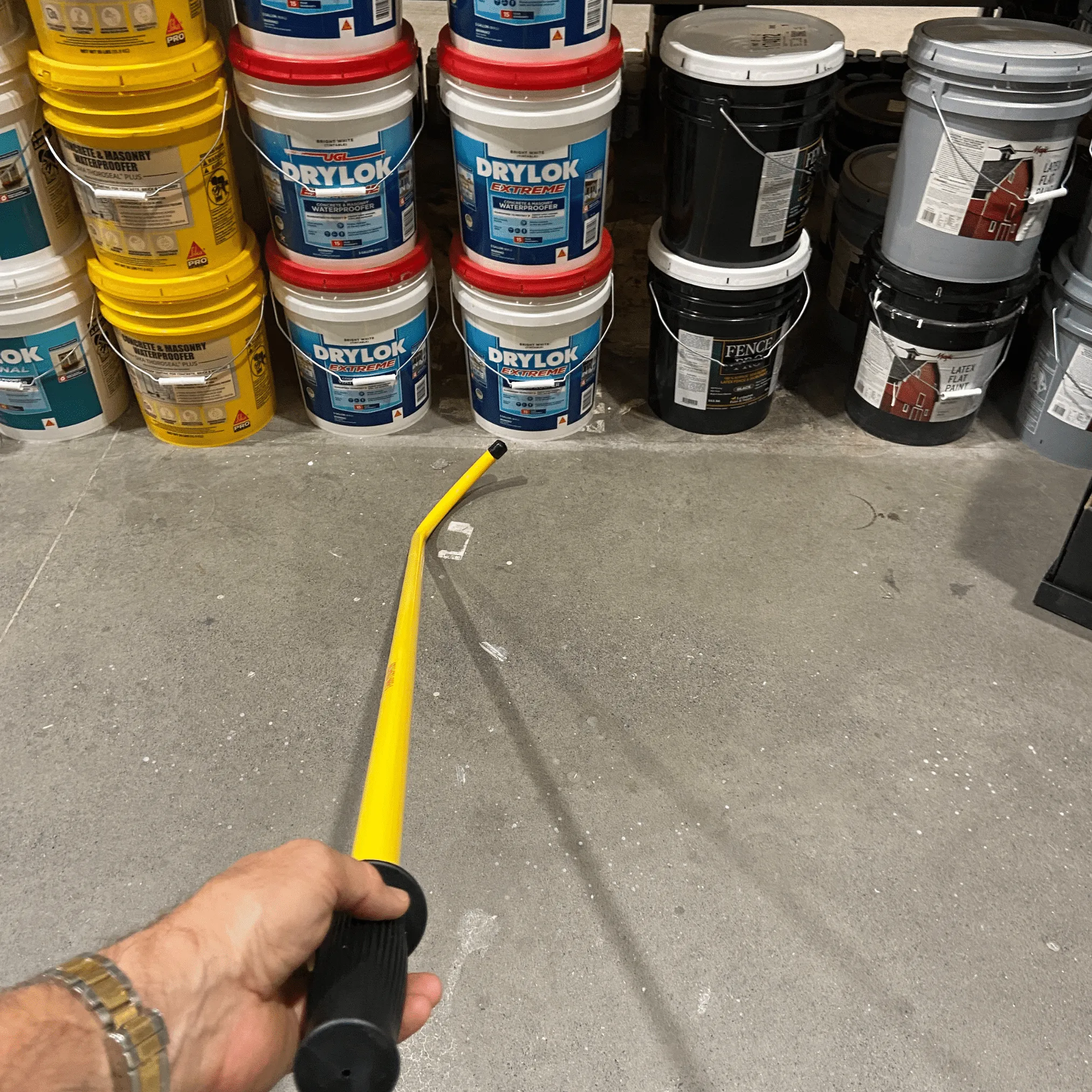
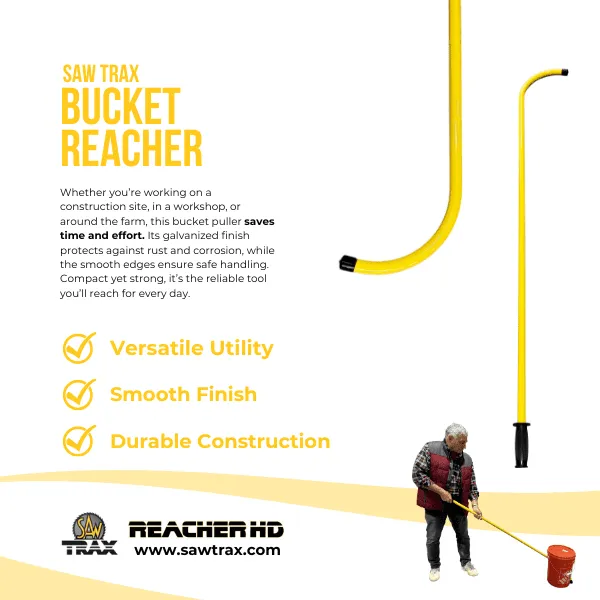
The Saw Trax 5 Gallon Bucket Reacher was designed specifically for this job. It is a formed steel pulling tool shaped to reach between tightly packed 5-gallon buckets, even when the bucket handles are facing the wrong direction or are not usable.

With its long reach and curved design, employees can stay in the aisle instead of crawling under the racks. The tool can pull stacks of buckets forward from under pallet racking and can reach over a front bucket to pull the stack behind it.

That changes the entire task. Instead of unloading the front row, going under the rack, pulling the back row forward, and restacking the front, the merchandiser can bring the product forward in a fraction of the time.

Built for Retail Merchandising Work

Bucket Reacher 600 x 600 px 2

The Bucket Reacher is part of the Saw Trax line of reaching tools for retail, warehouse, and home center use. Like other Saw Trax reach tools, it is designed around real merchandising problems rather than improvised workarounds.

For paint departments, hardware stores, construction supply stores, and home centers, the advantage is simple: keep workers out from under the racks, reduce unnecessary lifting and rearranging, and make heavy bucket merchandising faster.

A Small Tool for a Big Daily Problem

Customers may never notice the difference, but paint teams do. A stack of 5-gallon buckets that used to require crawling, reaching, and restacking can now be pulled forward from the aisle with a tool made for the job.

That is why the 5 Gallon Bucket Reacher has become such a practical solution for one of the most frustrating jobs in the paint aisle.

Continue Reading

How much can you load onto a yel-Low Dolly with Extension?

Industrial Dolly Scaled

Industrial Dolly

When people ask how much the yel-Low Safety Dolly can carry, they’re usually thinking about weight. The answer is straightforward: it’s rated for loads up to 1,000 pounds when they’re properly loaded and secured.

But in everyday material handling, weight is only part of the equation. Many of the most difficult loads are not exceptionally heavy. They’re oversized, awkward, or difficult to balance. That is exactly where Outriggers make a noticeable difference.

A Real-World Example

Tradeshow Dolly

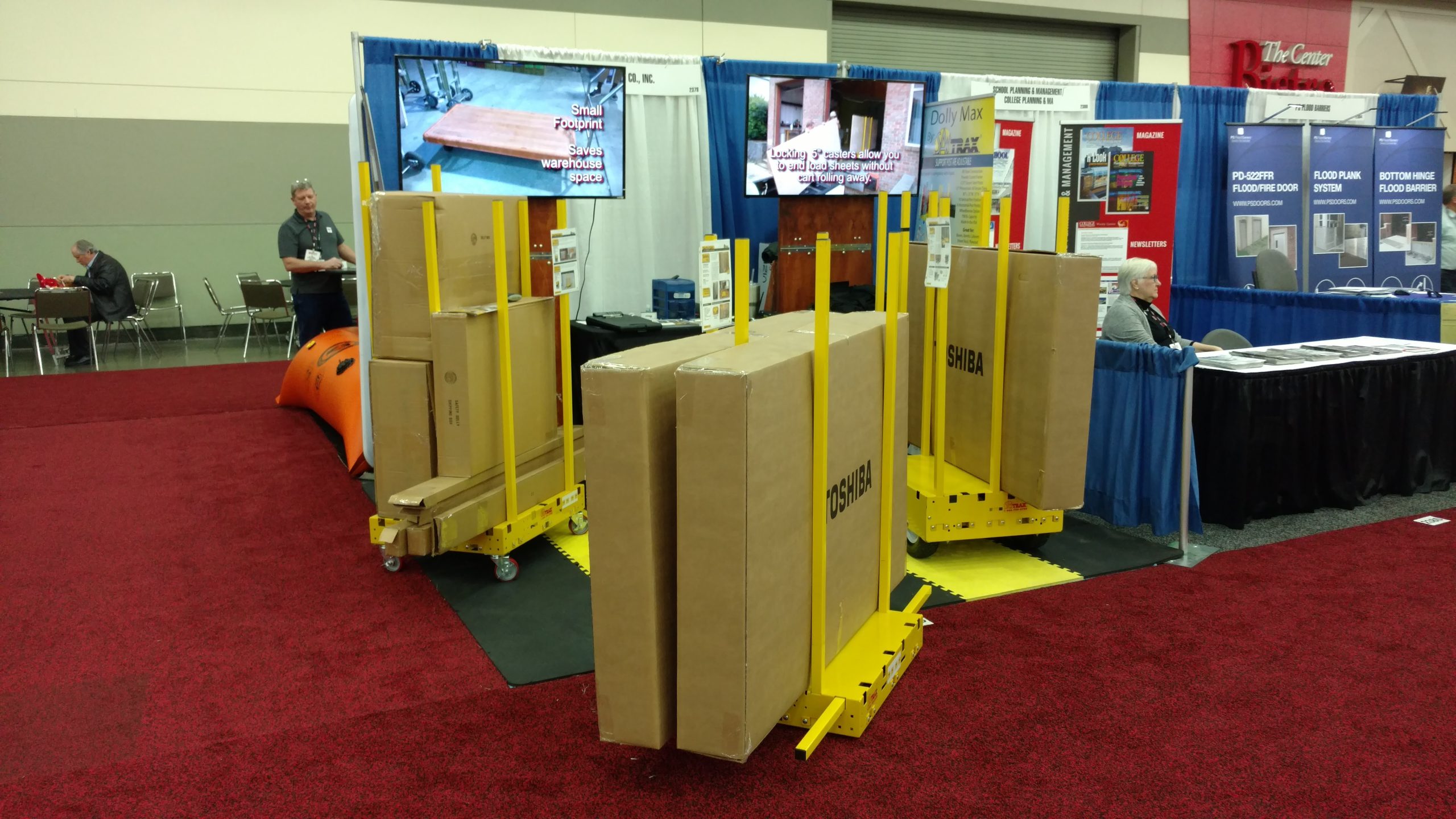
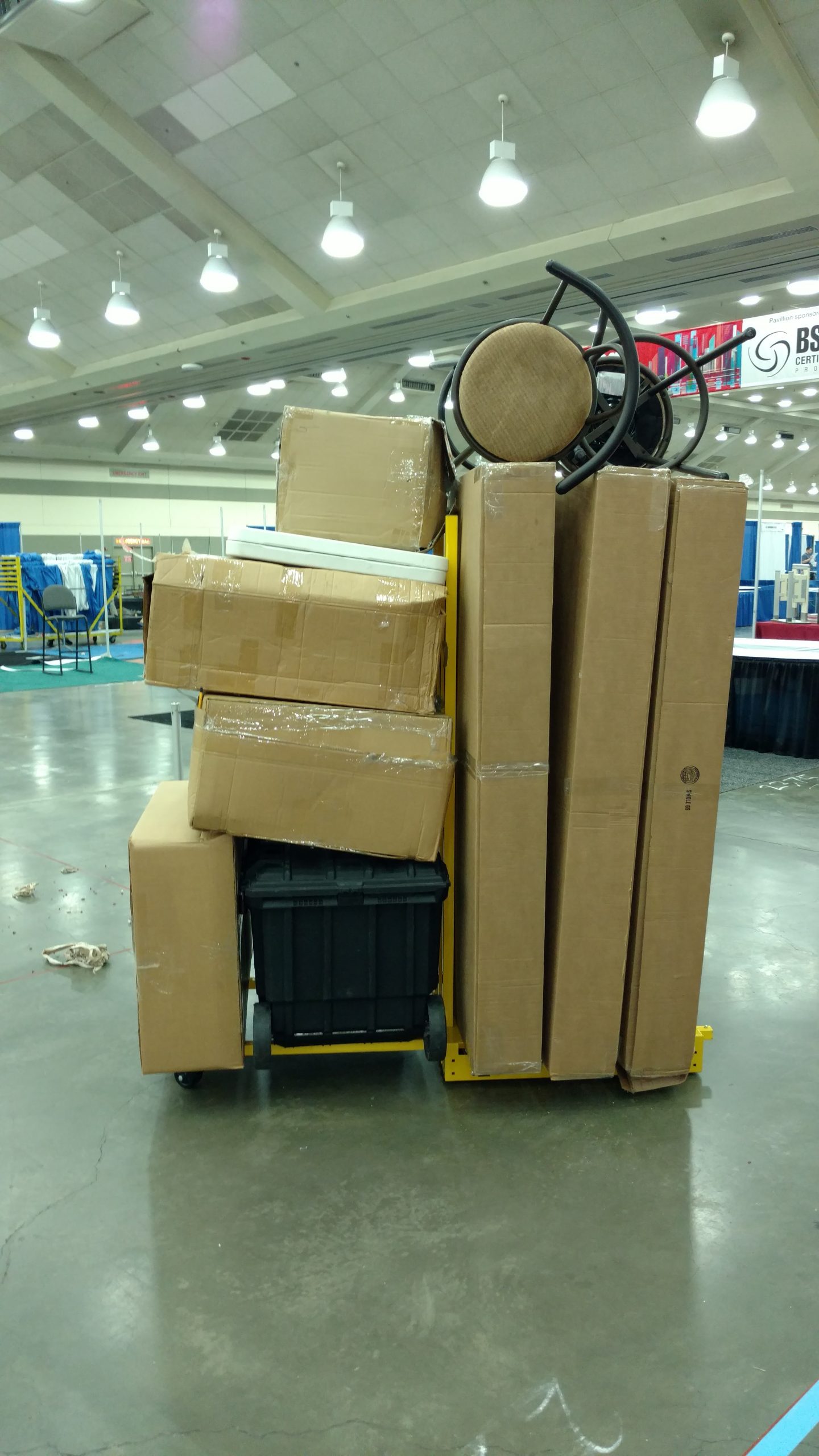
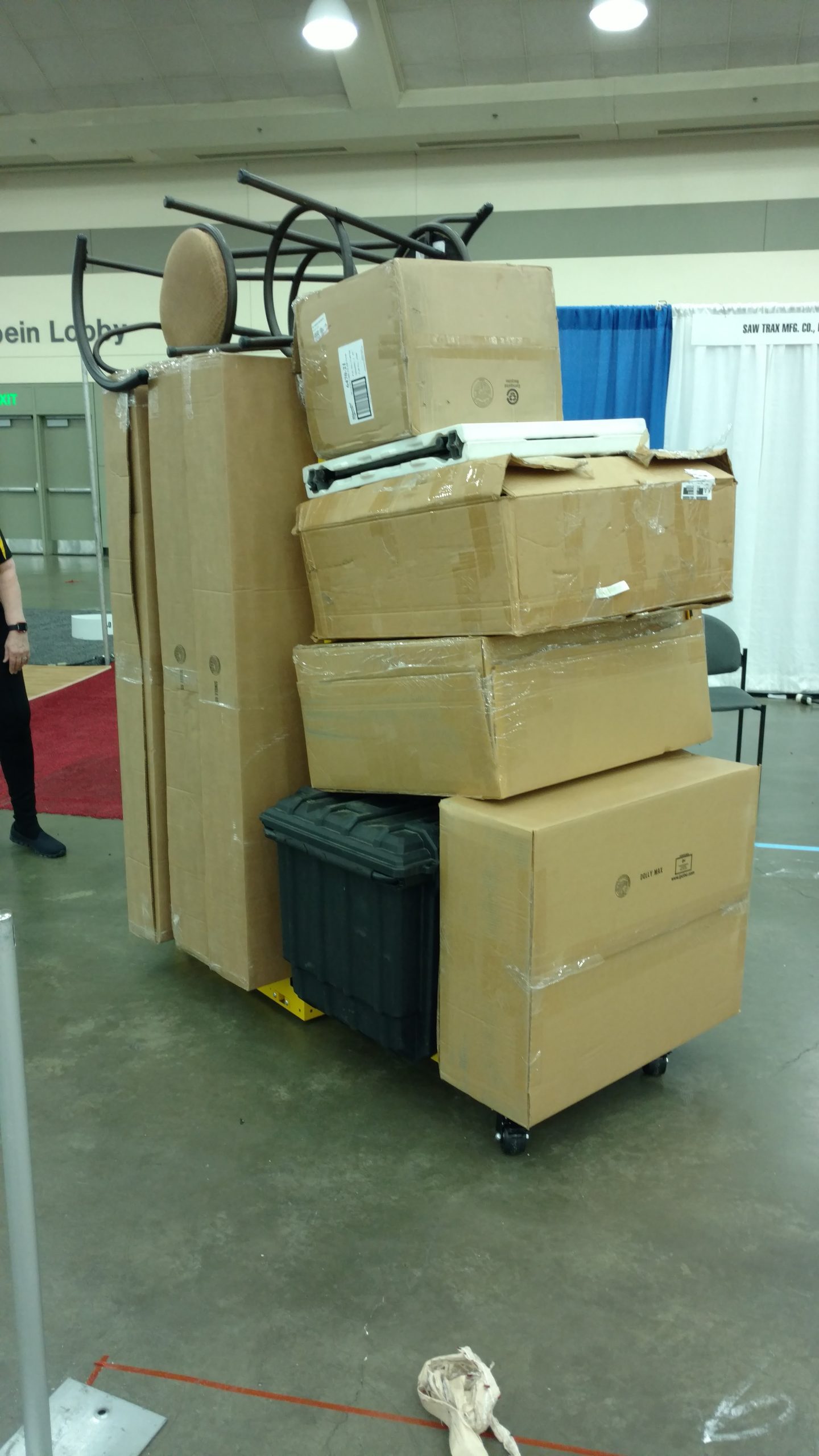
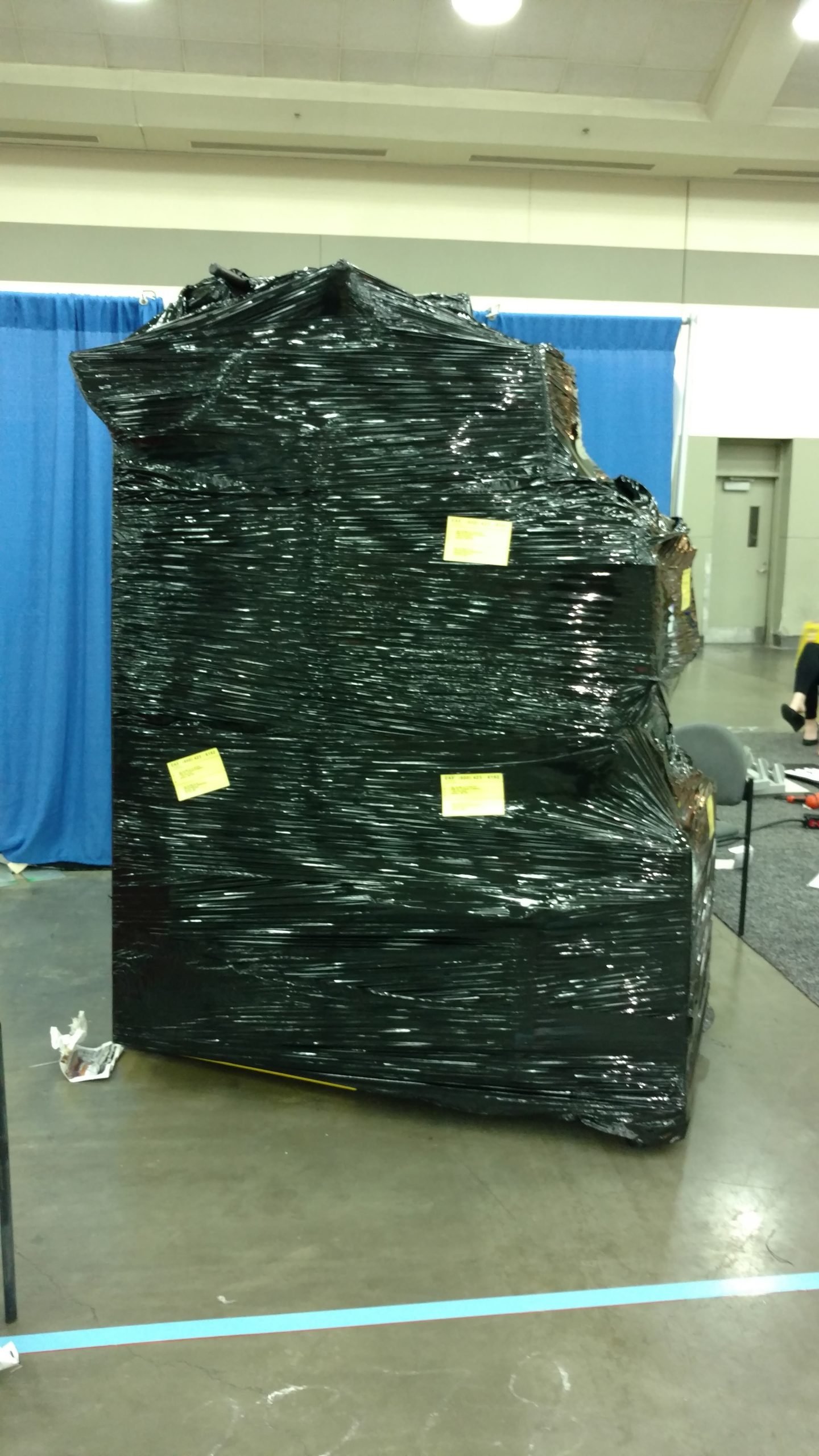
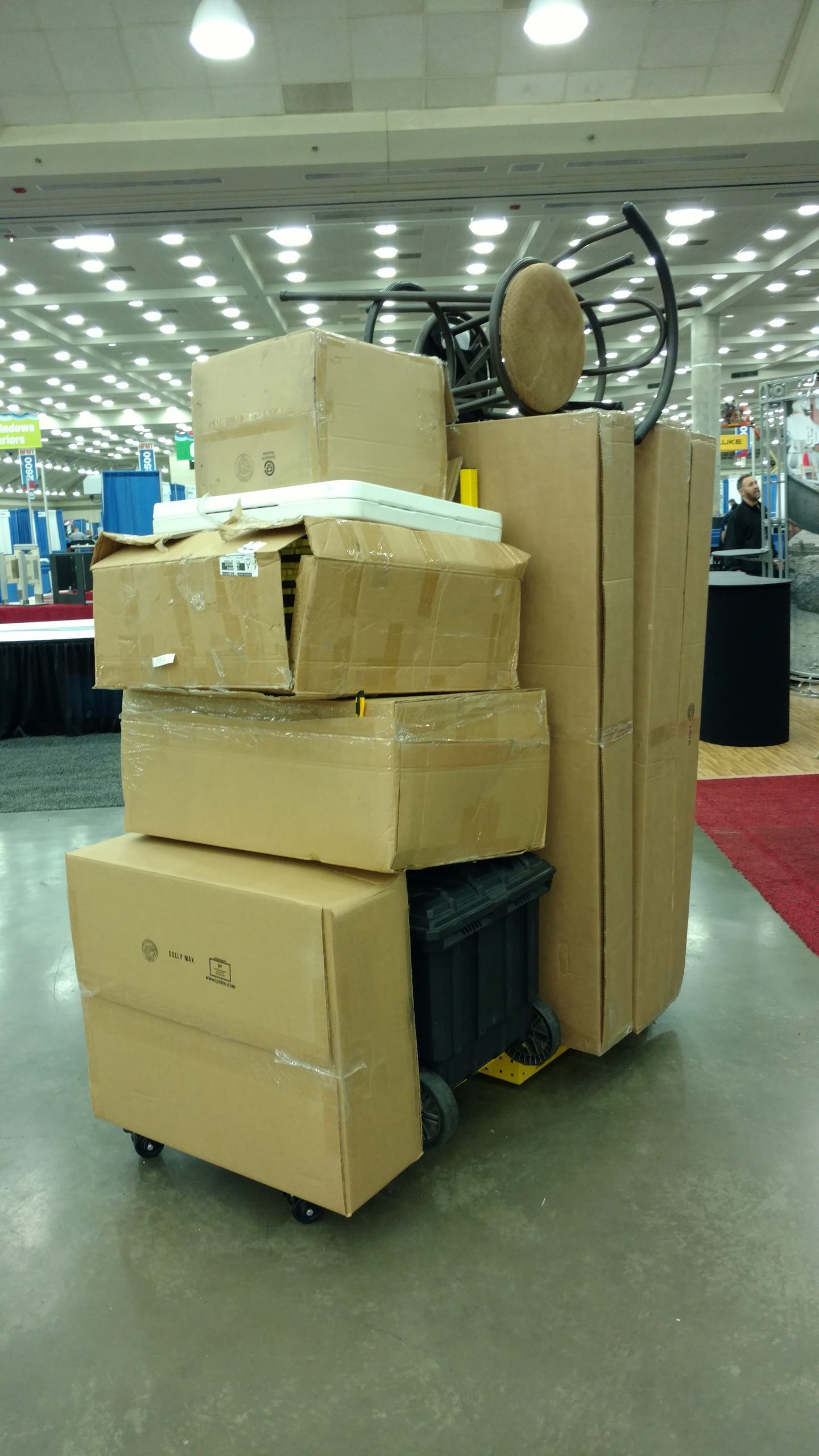
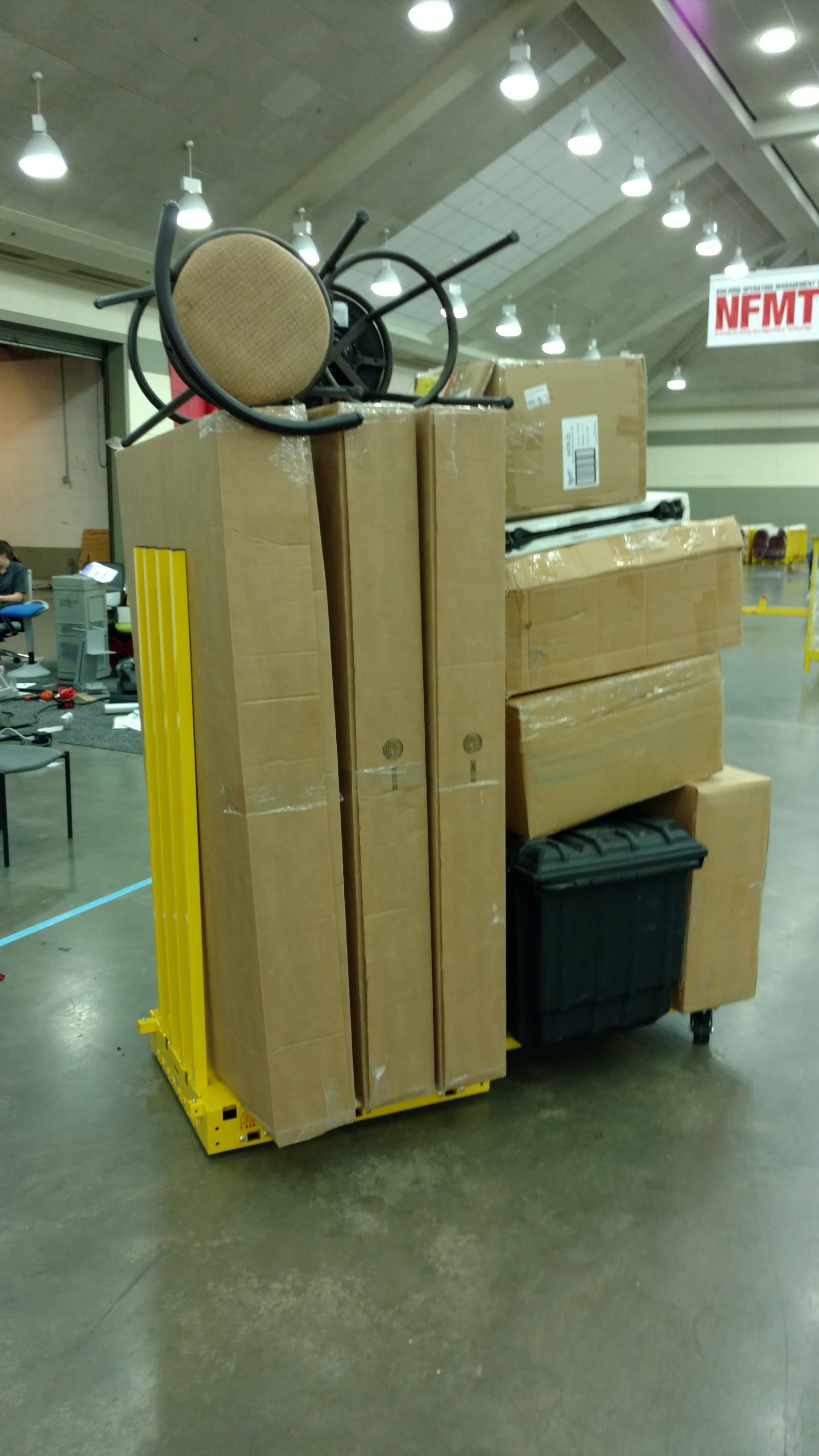
Take a look at the photos above. An entire trade show booth has been consolidated onto a single yel-Low Safety Dolly equipped with Outriggers. Display panels, shipping cartons, booth hardware, and other bulky components have all been staged on one cart instead of being scattered across multiple trips.

At first glance, it almost looks impossible. The load extends well beyond what most people would expect a dolly to handle. The important thing to understand is that the Outriggers are not increasing the dolly’s weight rating. Instead, they provide additional support for larger loads by expanding the usable carrying area.

That distinction is important because many material handling challenges are caused by the size and shape of a load, not simply by how much it weighs.

Why Footprint Matters

Commercial Grade Dolly

Anyone who has moved large equipment knows the problem. A load may be well within the weight capacity of a cart, yet still feel unstable because it hangs too far over the edges or has an uneven center of gravity.

Trade show displays are a perfect example. Booth walls, long cartons, graphics, shelving, display frames, and shipping cases rarely stack into a neat, compact package. They occupy space, which means they need support.

By expanding the support area, Outriggers help distribute bulky loads more effectively across the dolly. The result is a load that is easier to organize, easier to secure, and easier to move through warehouses, convention centers, loading docks, and manufacturing facilities.

Designed for Bulky Materials

How Much Can a Dolly Hold

The Outriggers accessory is designed to increase the usable footprint of the dolly, making it a practical solution for loads that simply require more support.

That can include:

  • Trade show booths and exhibit materials
  • Oversized signs and graphics
  • Furniture and office fixtures
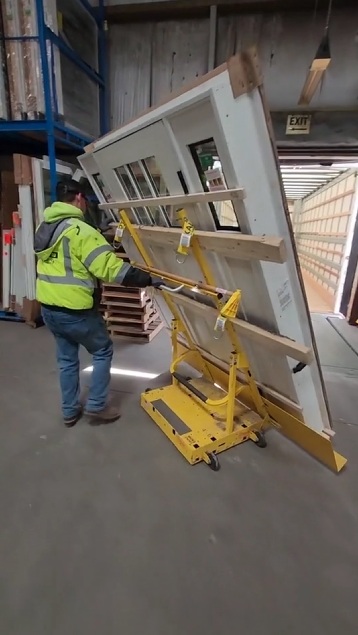
  • Doors and windows
  • Large boxed equipment
  • Warehouse staging loads
  • Panels and sheet goods
  • Retail displays and store fixtures

Instead of making multiple trips with partially loaded carts, operators can often consolidate bulky materials into one organized load while remaining within the dolly’s rated capacity.

Working Smarter, Not Harder

Every additional trip through a warehouse or job site takes time. Every time materials are unloaded and reloaded, there is another opportunity for product damage or worker fatigue.

Moving more material in a single trip improves efficiency while reducing unnecessary handling. For companies that regularly transport oversized products, that can have a measurable impact on productivity throughout the workday.

This is one of the reasons the yel-Low Safety Dolly has become a popular choice in sign shops, manufacturing facilities, distribution centers, glass companies, cabinet shops, furniture operations, and event production businesses. It allows one person to safely move materials that often require multiple trips or additional labor with traditional carts.

It’s Not About Carrying More Weight

The photos demonstrate an important point. The impressive part is not that the dolly is carrying more than its rated capacity. It isn’t.

The real advantage is that the larger footprint created by the Outriggers allows bulky materials to be supported more effectively while remaining within the 1,000-pound load rating.

That means fewer trips, better load control, improved stability, and a safer, more efficient way to move oversized materials.

To explore additional material handling solutions for warehouses, manufacturers, installers, and commercial facilities, browse the complete lineup of Saw Trax industrial carts and dollies.


Heavy Dolly

Dollies by SawTrax

Continue Reading

The Hidden Shipping Risk for Vertical Panel Saws: Why Proper Crating Matters Before Your Machine Ever Cuts Its First Sheet

Vertical Panel Saw Crating Process

When you invest in a vertical panel saw, you are not just buying a machine — you are buying precision, productivity, and the expectation that it will arrive ready to work. That is why shipping matters more than many buyers realize. A vertical panel saw is large, tall, and naturally top heavy, which means poor packaging can lead to bent components, damaged frames, or alignment issues before the machine ever reaches your shop floor.

For buyers comparing vertical panel saw brands, this is an important question to ask: How is the machine protected on the way to your facility? Because when a machine travels through freight terminals, forklifts, trailers, and loading docks, cardboard alone is not much defense. For a top-heavy machine like a vertical panel saw, the difference between basic packaging and a reinforced crate can be the difference between immediate production and unexpected downtime.

Why Vertical Panel Saws Need Better Shipping Protection

How We Ship Our Vertical Panel Saws Vertical Panel Saw Crating Process

Vertical panel saws are built to handle large sheet goods while saving floor space and improving ease of use. But the same upright design that makes them efficient in the shop also makes them more vulnerable during freight movement. Their height, frame structure, and weight distribution mean they must be stabilized properly, labeled clearly, and protected against tipping, impact, and shifting in transit.

That matters even more with precision-built machines like Saw Trax vertical panel saws, which are designed around features such as the Accu-Square alignment system, the Accu-Glide sealed bearing system, and on full-size units, the Accu-Fence alignment system. These features are meant to deliver square, accurate cuts and smooth carriage travel. Protecting that precision starts before the saw is even unloaded.

From Final Bolt Check to Freight Pickup

A well-shipped vertical panel saw does not begin with the crate. It begins with preparation.

Before shipping, each machine should be checked to confirm that critical bolts are secure, the saw is stabilized, and the unit is ready to withstand the realities of LTL freight handling. For a vertical panel saw, that preparation is especially important because even minor movement in transit can affect components that matter to long-term usability.

This attention to detail fits the broader Saw Trax approach. The company has built its reputation around designing vertical panel saws that are accurate, durable, and easier to use, with models ranging from the Compact Classic Series and Varsity Series to the 1000 Series, 2000 Series, 3000 Series, and Sign Maker’s Series. Protecting those machines during shipment is simply an extension of building them correctly in the first place.

Cardboard or 2x4s? The Real Difference in Shipping a Vertical Panel Saw

This is where buyers should pay attention.

Some large machines are shipped with minimal external protection. But a vertical panel saw is not the kind of equipment that should be left vulnerable to freight damage. Saw Trax emphasizes the use of crating with wood framing rather than relying on cardboard alone, because large upright machines need real structural protection around them. That means the machine is surrounded by a more rigid barrier designed to handle the impact, compression, and shifting that can happen in transit.

For a customer receiving a vertical panel saw, this has practical benefits:

• Better protection against forklift contact
• Better resistance to shifting loads in transit
• Better support for a top-heavy machine
• Better odds that the saw arrives in the same condition it left the factory

Clear Handling Instructions for a Top-Heavy Machine

Because vertical panel saws are top heavy, handling instructions are not optional. Proper freight labeling should make it obvious that the crate must remain oriented correctly and handled with care. Marking which side faces the wall, warning carriers that the load is top heavy, and reinforcing the machine inside the crate all help reduce avoidable shipping damage.

These are the kinds of details that matter when shipping equipment built for precision cutting. If a panel saw arrives damaged, the customer does not care whether the problem happened at the factory or during freight. They only know the machine is not ready to use. Good shipping practices help prevent that scenario.

Why Tip-N-Tell and Shrink Wrap Add Another Layer of Protection

Crating is the primary defense, but it is not the only one.

Adding a Tip-N-Tell indicator gives immediate visual evidence if a crate has been tipped or mishandled during transport. That helps the receiving customer inspect the shipment more carefully before acceptance. Shrink wrapping the crated machine adds another layer of protection against moisture, dust, and surface damage while keeping the shipment tighter and cleaner through the freight process.

Together, these steps show a practical understanding of what it takes to move a vertical panel saw safely from the manufacturer to the customer.

Shipping Protection Supports Cutting Accuracy

Saw Trax has long positioned its machines around precision, ease of use, and durability, with features such as sealed steel bearings, factory-set alignment systems, powder-coated steel frames, nickel chrome guide tubes, and quick-change carriages. Those features are central to what makes the company’s vertical panel saws more accurate and easier to use.

But no alignment system can do its job if a machine is damaged in shipping. That is why proper packaging is not separate from product quality. It is part of it.

What Vertical Panel Saw Buyers Should Ask Before Ordering

If you are comparing brands, ask these questions before you buy:

• Is the vertical panel saw shipped in a real crate or basic packaging?
• How is the machine stabilized inside the crate?
• Are there clear top-heavy handling instructions for carriers?
• Is there a way to tell if the shipment was tipped in transit?
• Is the machine protected against moisture and cosmetic damage?

These questions can save time, money, and frustration — especially when you are purchasing a machine you expect to put into production quickly.

The Bottom Line

A vertical panel saw should arrive the same way it left the factory: secure, aligned, protected, and ready to work.

That is why shipping is not a side issue. It is part of the buying decision.

Whether you are looking at a compact machine like the Varsity Series, a shop workhorse like the 1000 Series, or a heavier-duty option like the 2000 Series or 3000 Series, the question is the same:

When your vertical panel saw ships, is it protected like precision equipment — or packaged like an afterthought?

At Saw Trax, the answer is clear: the company designs its equipment from the user’s perspective, and that includes how the machine is crated and shipped.

Continue Reading

How High of a Ladder is Safe to Fall From?

Warehouse Ladder Tool 768x1024

Warehouse Ladder Tool

In warehouse, distribution, and retail environments, ladder safety discussions often turn to height thresholds. Safety managers sometimes argue that small rolling ladders—typically 3-step models placing workers about 3 feet off the ground—don’t require accessories like reach tool holders. The reasoning: “It’s not high enough to matter.”

That logic is dangerously incomplete.

My standard response is direct: “So it’s acceptable if someone falls from a 3-foot ladder?”

A fall is a fall. Injuries, medical costs, lost time, and workers’ compensation claims do not politely scale with ladder height. Safe reaching practices matter at every elevation. The fundamental purpose of mounting a reach tool holder—such as the Reach Nest—remains identical whether the ladder has 3 steps or 10: keep both hands free during climbs, maintain three points of contact, and prevent the worker from leaning outside the ladder rails.

Why Leaning Outside the Rails Is Dangerous at Any Height

Ladder Safety

Rolling ladders are engineered so the base footprint widens with additional steps, but the principle never changes: stability exists only within the perimeter of the rails. Once a worker leans past those rails to grab a box, shelf face, or back-stocked item, the center of gravity shifts. The ladder can tip, or the person can simply lose balance and fall.

Reach tools solve this problem elegantly. Products like the compact, telescoping Pocket Reacher (available in standard and heavy-duty versions) or longer Reacher Poles with Reacher Heads allow workers to pull merchandise forward, break conveyor jams, retrieve high-peg items, or face out displays—all while remaining centered between the rails.

Keeping the tool mounted directly on the ladder with a Reach Nest eliminates the need to climb down, retrieve the pole, climb back up, and then repeat the process after placing the item. One smooth, safe motion replaces multiple risky trips.

Muscle Memory and the Power of Consistent Habits

Ladder Statistics

Another critical—but frequently overlooked—factor is habit formation. When workers routinely lean outside the rails on a short 3-foot ladder because “it’s only three feet,” they train their bodies and brains to accept that posture as normal. Those same neuromuscular patterns and risk assessments transfer directly to taller ladders. The lean that felt acceptable at 3 feet suddenly becomes catastrophic at 9 or 12 feet.

Pilots are trained to fly the same disciplined procedures in a small trainer aircraft as they do in a large jet transport. Consistency builds automatic, correct responses that transfer across platforms. Ladder use follows the same logic.

A well-known Navy maxim captures it perfectly: “Train as you fight, fight as you train.” Treat every ladder—regardless of step count—with the same safety discipline. Mount a Reach Nest on small ladders just as you would on large ones. Keep a Pocket Reacher in the Reach-Now Pocket Reacher Holster on your belt or smock for ground-level tasks. Use Heavy Duty Reacher Pull Pole Ends on longer poles when heavier items must be pulled without tearing bags. Build the habit early and consistently.

The Real Cost of “It’s Only a Small Ladder”

OSHA does not exempt short ladders from fall-protection requirements or safe work practices. Statistics show that a meaningful percentage of ladder-related injuries occur at low heights—often because workers underestimate the risk and forgo basic safeguards.

Equipping every rolling ladder with a Reach Nest, outfitting team members with portable Pocket Reachers, and standardizing reach-pole usage creates a culture of proactive safety rather than reactive injury management.

The question is not “How high is safe to fall from?”

The only defensible question is: “Why allow a fall at any height when simple, proven tools make it preventable?”

Safety is measured in consistency, not in feet.

Continue Reading

When Boxing In Your Team Is Actually a Good Thing: The Safety Power of Staying “In the Box”

IMG 9111 1 E1757610305498

Reach Nest Ladder Holder for Reach Tools

In the world of workplace safety and productivity, we’re constantly encouraged to “think outside the box.” Innovation thrives on creativity, bold ideas, and pushing boundaries. But when it comes to working at heights on rolling ladders or powered lifts in warehouses, distribution centers, or retail stockrooms, staying firmly inside the box is often the smartest—and safest—move you can make.

That “box” refers to the safe footprint of your ladder or lift platform: the designated area where your body weight is centered, your balance is stable, and the risk of tipping or falling is minimized. OSHA guidelines emphasize maintaining three points of contact (two hands and one foot, or two feet and one hand) while climbing or descending ladders to ensure stability and reduce fall risks. Leaning outside this safe zone to grab an item on a high shelf or deep rack? That’s a recipe for disaster.

Common scenarios play out every day: A worker climbs a rolling ladder to retrieve stock, realizes the item is just out of comfortable reach, and instinctively leans over the side rails or platform edge. This overextension shifts weight unnaturally, increasing the chance of the ladder tipping, the platform becoming unstable, or the worker losing balance entirely. For aerial lifts, similar hazards include tip-overs, ejections, or falls when leaning beyond guardrails—issues OSHA highlights as leading causes of serious injuries and fatalities in elevated work environments.

The temptation is real: Why climb down, track down a reach tool, and climb back up when you can just stretch a little farther? But that “little stretch” compromises safety protocols, violates three-point contact principles, and exposes your team to preventable accidents.

Enter the Reach Nest: Keeping Your Team Safely “In the Box”

One of the most effective ways to encourage safe behavior is to eliminate the need to lean out in the first place. By providing easy access to a reach tool right where it’s needed—on the ladder or lift itself—workers can pull items from the back of shelves to the front edge without ever leaving the safe footprint.

That’s where the Reach Nest Tool Holder comes in. This simple yet game-changing accessory allows you to pre-stage a reach pole directly on your rolling ladder or powered lift. No more discovering mid-task that you need a reacher, no risky overreaching, and no awkward descents or ascents juggling tools and products.

Key benefits include:

  • Enhanced Safety: Workers stay centered on the platform, maintaining three points of contact and reducing fall or tip-over risks.
  • Time Efficiency: Eliminate unnecessary trips down and back up the ladder to fetch or return a reach tool—saving valuable minutes on every pick.
  • Reduced Awkward Maneuvers: No more squatting at the top step with both hands full (one holding the item, one trying to balance the reach pole) or climbing with tools in hand, which can disrupt balance.
  • Easy Installation: Made from durable glass-reinforced ABS, the Reach Nest attaches vertically or horizontally to 1″ to 1.25″ round or square tubing commonly found on ladders and lifts.

Priced affordably the Reach Nest is a great investment in proactive safety. By staging the reach tool right at the point of use, it empowers your team to grab what they need without compromising their position—literally keeping them “boxed in” for their own protection.

In safety, sometimes the best innovation isn’t about thinking outside the box—it’s about making sure your people never have to leave it. Equip your ladders and lifts with the Reach Nest today, and turn a common hazard into a seamless, secure workflow.

Stay safe, stay efficient, and remember: When working at heights, the best box is the one that keeps your team securely inside.

Continue Reading